Case Lookup opens a direct path to the official records that track every filing, motion, and judgment across New Jersey’s Superior Court system. By entering a case number, party name, attorney name, filing date, or docket identifier, users can instantly view case lookup case records, case information, and current case status without leaving the portal. The platform pulls data from the court case database, presenting case history, case details, and case disposition alongside the assigned judge and court division. Whether you need a case record search for a civil lawsuit, a criminal proceeding, or a family matter, the interface matches user intent to the correct court case lookup endpoint, returning reliable case status updates and document links when public. This approach builds authority by anchoring each result to the verified court case information source, ensuring that researchers, attorneys, and self‑represented litigants receive the exact case data they require. It also supports case lookup by number and by name to cover public court cases across the entire jurisdiction.
Case Lookup streamlines the search for a specific docket by offering separate fields for case number, filing date, and party role, so a user can answer how to look up a court case when only a citation is available. Inputting the exact case number immediately returns the case title, case type, and case outcome, while a name‑only query runs a case lookup by name that filters results by court, division, and filing year to reduce false matches. The system also enables a case lookup by attorney, revealing the attorney of record and their other appearances in the database, which is essential for anyone trying to find an attorney on a court case. For pending matters, the portal displays an active case status flag and, when the case is closed, a case disposition label such as dismissed, disposed, or appealed. Users can also retrieve filing details, docket events, and any publicly available case documents, making the entire case history accessible from a single entry point without navigating multiple clerk websites.
How to Search Case Lookup
Case Lookup at the Essex County Superior Court gives you a direct path to public court case records filed in Newark and across the county. By entering a case number, party name, attorney name, filing date, or docket identifier, you can pull case details, case status, and case history straight from the official court database. Researchers and residents can cross-reference official felony records through county resources. The portal serves attorneys, researchers, self-represented litigants, and members of the public who need verified court case information for civil, criminal, family, and probate matters. Results show the assigned court division, the presiding judge, and any publicly available case documents linked to the docket.
Official Search Portal: https://www.njcourts.gov/courts/superior/essex
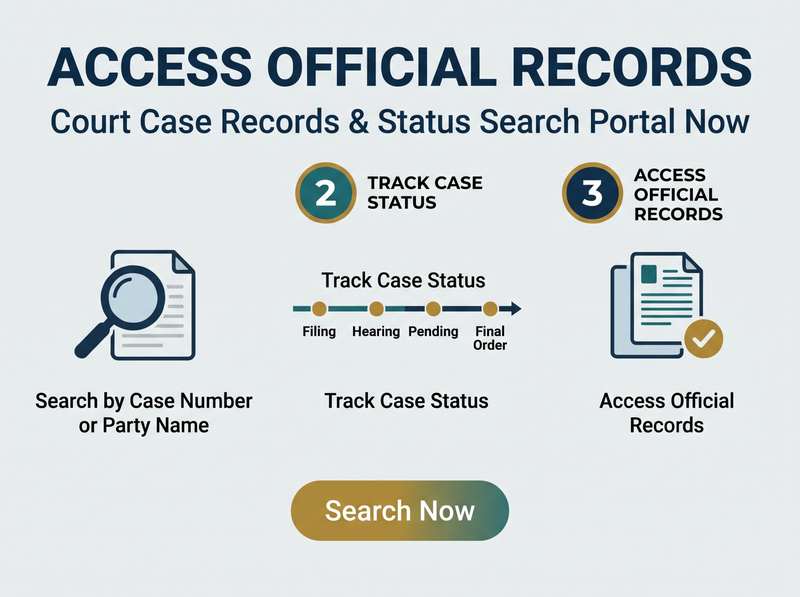
Steps to Search
- Visit the official New Jersey Courts website and select the Essex County Superior Court page using the link shown above.
- Choose your search method from the available options, such as case number, party name, attorney name, or filing date.
- Type the required information into the correct field, double-checking the spelling and format of names and numbers.
- Select the correct court division or case type from the drop-down menu to narrow down the search.
- Press the search button and review the returned list of cases that match your criteria.
- Click the case number of the matching record to view the full case details, party information, and case history.
- Download or print any available case documents directly from the results page, or note the docket number for later reference.
Case Lookup by Case Number
Using the case number produces the fastest and most accurate results from the court case database. Enter the full docket number, including the two-letter court prefix, the year, and the sequence digits, exactly as printed on any court paperwork. The system immediately displays the case title, case type, filing date, and current case status without returning unrelated records. If the number is incomplete or mistyped, the portal returns zero results rather than approximate matches.
Case Lookup by Party Name
A case lookup by name lets you search using the full legal name of a plaintiff, defendant, petitioner, or respondent. Type the last name first, followed by the first name, and add a middle name or initial when available to narrow the list. Results can be filtered by case type, filing year, and court division to avoid confusion between parties who share similar names. Each returned row shows the case number, the role of the party, and the current case status for quick review.
Case Lookup by Attorney Name
Searching by attorney name shows every case in which a specific lawyer appears as the attorney of record. Enter the bar name, add a firm name if listed, and filter by court division to see only the cases filed in Essex County. This method helps you verify attorney representation, build a list of related cases, and confirm that the correct legal counsel is connected to a given matter. The results display the attorney bar number, the associated firm, and the case numbers tied to that representation.
Case Lookup by Filing Date
A filing date search restricts results to cases opened on a specific day, week, month, or year. Use the calendar tool to pick the start and end dates, and pair the search with a case type filter for cleaner data. This approach works well when you know a case was opened during a particular period but lack the docket identifier. The portal returns a chronological list of all filings that match the chosen window.
Case Lookup by Court or Division
The Essex County Superior Court operates several divisions, including Civil, Criminal, Family, and Probate. Selecting the correct division before searching removes cases from other parts of the court and shortens the result list. Use this filter alongside other search fields to combine a party name with a division, or to limit an attorney search to criminal court appearances only. Each result row identifies the division so you can confirm the case belongs to the right venue.
Information Needed for a Case Lookup
You will need at least one piece of identifying data to start a search, such as a case number, party name, attorney name, or filing date. More specific details, including the case type, court division, and filing year, return cleaner results with fewer false matches. If you hold a paper document with the docket header, use the exact identifiers printed there. If you only know a name, gather the full legal spelling and approximate year of filing before running the query.
| Search Field | Data to Enter | Best Use Case |
|---|---|---|
| Case Number | Full docket identifier | Single record lookup |
| Party Name | Last, First, Middle | Identify all cases for a person |
| Attorney Name | Bar name and firm | Verify legal representation |
| Filing Date | Start and end date range | Find cases opened in a period |
| Court Division | Civil, Criminal, Family, Probate | Limit scope to one division |
Case Lookup Results
When the search returns a match, the results page presents a structured snapshot of the docket pulled directly from the court case database. Each entry contains the case number, case title, party names, attorney information, assigned judge, filing date, case type, current status, and final disposition when applicable. You can click any case number to open the full docket sheet and view the complete case history. The portal also links to related cases and publicly available case documents tied to the same record.
Case Number and Case Title
The case number acts as the unique fingerprint for every filing in the Essex County Superior Court system. The case title lists the full names of the primary parties, such as plaintiff versus defendant or applicant versus respondent, in the order they appear in the docket. Together, these two fields confirm that you have located the correct record before you read the docket entries or request certified copies. Always record the exact case number for any later follow-up with the court clerk.
Party Names and Roles
The party section lists every individual or organization connected to the case, along with the specific role each one plays. Common labels include plaintiff, defendant, petitioner, respondent, third-party defendant, and intervenor. Roles show how a person entered the case, whether as the original filing party, an added party, or a witness subject to a subpoena. Reviewing this section clarifies who initiated the matter and who is responding to the claims.
Attorney Information
The attorney block displays the name of the attorney of record, the firm name, the bar number, and contact details when public. For each party, the portal lists the representing attorney along with the date that counsel entered an appearance or filed a substitution of attorney. This data helps verify that a specific lawyer is still active on a case or has been replaced. You can click the attorney name to view other cases where that attorney serves as counsel of record.
Court and Assigned Judge
Every docket records the specific court division, such as Civil, Criminal, Chancery, Family, or Probate, and the name of the assigned judge at the time of the filing. The judge assignment may change during the life of a case due to reassignment, recusal, or retirement, and each change is logged in the case activity timeline. Knowing the current assigned judge helps you address future filings to the correct courtroom and calendar. The court division code at the start of the case number also confirms the venue.
Filing Date and Case Type
The filing date marks the official day the court accepted the initial complaint, petition, or indictment. The case type field identifies whether the matter is civil, criminal, family, probate, juvenile, municipal appeal, or another category tracked by the Superior Court. Together, these fields establish how old the docket is and what body of law governs the proceedings. They also help you estimate the stage of the case based on average processing times for that case type.
Case Status
The case status flag shows the current state of the docket, such as active, pending, closed, disposed, dismissed, or appealed. A status of active or pending means the matter is still moving through hearings, motions, or settlement discussions. A status of closed, disposed, or dismissed shows that the court has entered a final order or terminated the case. An appealed status indicates that a higher court is reviewing the decision of the lower court.
Case Disposition
The case disposition records the final outcome of the docket, such as judgment for the plaintiff, judgment for the defendant, settlement, dismissal with prejudice, dismissal without prejudice, or conviction and sentence. Disposition data is most useful for closed cases that have completed every appeal window. For criminal matters, the disposition often includes sentencing details, fines, probation terms, or incarceration orders. Always review the disposition date alongside the disposition type for full context.
Case Information
Beyond the basic case details, the portal presents deeper case information drawn from filings, motions, and orders entered into the docket. This section covers filing details, charges and allegations, claims and issues, case events and proceedings, orders and judgments, case outcome, and related case information. Each data point comes from a specific entry in the official docket and links to the source document when public. Reviewing this section gives a full picture of how the matter unfolded from filing to resolution.
Case Filing Details
Case filing details describe the contents of the original document that started the matter, such as a civil complaint, a criminal indictment, a family petition, or a probate application. The portal lists the filing type, the filing party, the date the court received the document, and any associated fees. The filing details also note the track designation for civil cases, such as Track A, Track B, or Track C, which controls discovery timelines and trial readiness rules.
Charges and Allegations
In criminal matters, the charges and allegations section lists each count charged by the state, the statutory citation for each offense, and the degree of the charge. The entry also shows whether each count is a misdemeanor, felony, or traffic offense, along with any enhancements or prior convictions that affect sentencing. Civil cases mirror this field with claims for relief, statutory bases, and the dollar amount in controversy. The information is sourced directly from the initial charging document or complaint.
Claims and Issues
For civil, family, and probate cases, the claims and issues section captures the legal theories raised in the pleadings. Common claims include breach of contract, negligence, divorce, adoption, guardianship, and will contest. The section also lists affirmative defenses raised by the responding party, such as statute of limitations, comparative fault, or lack of standing. Reviewing both claims and defenses helps you assess the legal posture of the case before reading motions or orders.
Case Events and Proceedings
The case events log captures every formal activity recorded on the docket, including motions filed, pleadings served, discovery requests, depositions, conferences, and hearings. Each event shows the date, the type of event, the party that triggered it, and the document reference number. The log runs chronologically from the initial filing to the most recent entry. Researchers use this section to reconstruct the procedural history of the matter.
Orders and Judgments
Orders and judgments are official court directives that resolve specific issues or close out the case entirely. The portal lists each one with a short description, the issuing judge, the entry date, and a link to the public document when available. Examples include scheduling orders, discovery orders, summary judgment orders, final judgments, sentences, and injunctions. The list lets you review the substantive rulings that shaped the outcome of the case.
Case Outcome
The case outcome summarizes the final result in plain language, such as judgment entered, settlement reached, case dismissed, conviction affirmed, or sentence imposed. For civil cases, the outcome shows which side prevailed and any monetary award. For criminal cases, the outcome lists the verdict, any guilty plea, and the sentence imposed by the judge. The outcome ties together the disposition, orders, and judgments into a single closing picture.
Related Case Information
Many dockets connect to related cases that share a party, attorney, or underlying factual basis. The related cases section lists those linked dockets by case number, title, and relationship type, such as consolidated, severed, or transferred. Reviewing related cases exposes how the court handled parallel filings, prior lawsuits, or appeals from the same underlying dispute. This view is especially helpful for complex commercial or criminal matters with multiple dockets.
Case Status
Case status tells you where a matter currently stands in the court process. The Essex County Superior Court uses a defined set of status codes that match the active, disposed, and closed phases of litigation. Status updates are posted to the docket as the court enters orders, holds hearings, or receives new filings. Reviewing the most recent status entry is the fastest way to know whether a case is moving, settled, or fully concluded.
Active Cases
An active case status means that the docket is open and the court is still handling motions, hearings, or settlement conferences. Active matters show recent filings within the past few months and no final judgment closing the case. The portal flags active cases with a clear status badge so researchers can focus on live disputes. Most active cases remain in this phase for between several months and several years, depending on the case type and track designation.
Pending Cases
A pending case is one that has been filed but is awaiting a specific court action, such as a motion hearing, trial date, or sentencing. Pending matters show scheduled future events on the docket and have no final judgment. Use the pending status to plan your next filing, hearing attendance, or service of process. The portal updates pending cases whenever a new event is entered on the docket.
Closed Cases
A closed case status indicates that the court has entered a final order terminating the matter. Once closed, no further pleadings are accepted except those related to post-judgment motions, appeals, or enforcement. Closed cases remain in the public database as historical records for researchers and journalists. Reviewing the closure date alongside the disposition type shows how long the case ran from filing to termination.
Disposed Cases
A disposed case has reached a clear resolution through judgment, settlement, plea, or dismissal. The disposition type captures how the case was resolved, while the disposition date shows when the resolution was entered on the docket. Disposed cases are typically closed shortly after disposition, though some remain open briefly to handle post-judgment motions. Researchers often use disposed cases to study court trends and case processing times.
Dismissed Cases
A dismissed case ended because the plaintiff withdrew the complaint, the court granted a motion to dismiss, or the statute of limitations expired. Dismissals may be with prejudice, which bars refiling, or without prejudice, which permits the plaintiff to refile. The dismissal entry on the docket shows who requested the dismissal, the judge who granted it, and the specific reason entered on the order.
Appealed Cases
An appealed case has been transferred to a higher court for review of the lower court’s decision. The portal shows the appellate court, the appeal docket number, and the status of the appeal. The original Superior Court docket remains visible alongside the appellate record for context. Appeals can take months or years to resolve, and the original case is closed only after the appellate process ends.
Case Status Updates
Case status updates are pushed to the docket whenever a new event, filing, or order is entered by the court or a party. The portal refreshes these updates as soon as the clerk records the new entry, so users see the latest status within minutes of entry. Researchers should refresh the case page whenever they revisit a docket to confirm they are reading the most current status.Status Meaning Typical Action AvailableActive Open and moving File motions, attend hearingsPending Awaiting court action Prepare for scheduled eventClosed Final order entered File post-judgment motionsDisposed Resolution entered Review outcome documentsDismissed Terminated without trial Refile if allowedAppealed Under higher court review Track appellate docket
Case Lookup by Case Type
The Essex County Superior Court organizes dockets by case type, and each type follows its own procedural rules. Civil, criminal, family, probate, juvenile, misdemeanor, felony, and traffic cases each have separate divisions, filing requirements, and timelines. Selecting the right case type before searching removes unrelated dockets from your results. The portal also groups results by type so you can scan large result sets quickly.
Civil Cases
Civil cases cover disputes between private parties, including breach of contract, personal injury, property damage, employment claims, and commercial litigation. The civil division assigns cases to Track A, B, or C based on the amount in controversy and the complexity of the issues. Each track carries its own discovery deadlines, mandatory settlement conferences, and trial readiness rules. Civil case documents often include complaints, answers, motions, and judgments available through the portal.
Criminal Cases
Criminal cases include indictable offenses prosecuted by the Essex County Prosecutor’s Office. The criminal division handles felony cases, certain misdemeanor appeals from municipal court, and post-conviction motions. Each criminal docket shows the indictment, the arraignment, the motions, the plea or trial outcome, and the sentence. Sensitive entries, such as juror identities and certain victim information, remain sealed even when the rest of the docket is public.
Family Cases
Family cases cover divorce, legal separation, child custody, child support, parenting time, adoption, and domestic violence matters. The Family Division handles these disputes through separate calendars for divorce, non-dissolution, and domestic violence filings. Family dockets often include financial disclosures, custody evaluations, and protection orders. Some family documents are sealed to safeguard children and confidential party details.
Probate Cases
Probate cases involve the administration of a decedent’s estate, guardianship of an incapacitated person, and trust matters. The Probate Division records filings such as wills, letters testamentary, inventories, accountings, and final decrees. Probate dockets often run for years while the estate is administered, and the portal lists each filing in chronological order. Guardianship cases follow separate procedural rules under New Jersey law.
Juvenile Cases
Juvenile cases involve delinquency charges against minors, as well as matters related to termination of parental rights and adoption of minors. The Juvenile Division handles these matters under rules that protect the identity of the juvenile. Most juvenile dockets remain restricted from public view, and the portal limits the level of detail shown in search results. Researchers with court authorization may request access to specific juvenile records through the clerk.
Misdemeanor Cases
Misdemeanor cases prosecuted in the Superior Court include certain disorderly persons offenses and appeals from municipal court convictions. These dockets show the original charge, the plea or trial outcome, and any sentence imposed by the judge. Many misdemeanor appeals are resolved quickly through plea agreements or summary dispositions. The portal exposes the full misdemeanor docket once the case is transferred to the Superior Court.
Felony Cases
Felony cases involve indictable offenses carrying potential state prison sentences. These dockets run from initial arrest through indictment, arraignment, pretrial motions, plea or trial, sentencing, and any appeal. Felony dockets can include hundreds of entries as motions, briefs, and orders are filed over months or years. The portal lists each entry with a date stamp and document link.
Traffic Cases
Traffic cases in the Superior Court include appeals from municipal traffic convictions and certain driving while intoxicated charges. The traffic docket shows the original ticket, the court of original jurisdiction, and the appeal record in the Superior Court. Most traffic dockets resolve quickly, but driving-while-intoxicated appeals can take longer because of motion practice. The portal lists each entry and any available public document.
Case Parties and Attorneys
The party and attorney section of every docket identifies the people who initiated the case, the people responding to it, and the lawyers representing each side. The portal lists the full legal name of every party, the role each one plays, the attorney of record, and any representing attorney. Reviewing this section is the fastest way to confirm who is involved in the matter and who serves as the active lawyer on the case.
Plaintiff and Defendant Information
The plaintiff is the person or organization that files the civil lawsuit, while the defendant is the party named in the complaint who must respond. The portal lists each name with the role label, the address of record when public, and the date the party first appeared in the case. When a defendant has been served, the docket shows the service date and the method of service used by the plaintiff.
Petitioner and Respondent Information
In family, probate, and certain civil matters, the parties are labeled as petitioner and respondent rather than plaintiff and defendant. The petitioner files the initial application or petition, while the respondent answers or appears in response to the filing. The portal applies this labeling automatically based on the case type and division. Reviewing both entries shows who initiated the matter and who is responding.
Attorney of Record
The attorney of record is the lawyer whose name appears on every formal filing for a particular party. The portal lists the attorney of record for the plaintiff, the defendant, and any third parties, along with the bar number, firm name, and contact information when public. If the attorney has been substituted or removed, the docket shows the substitution entry and the replacement counsel. This field is the official reference for legal representation on the case.
Representing Attorney
The representing attorney is the lawyer who actively appears at hearings, depositions, or trials on behalf of a party. The attorney of record and the representing attorney are often the same person, but a substitute attorney may enter a limited appearance for a specific hearing. The portal lists both roles so you can confirm who will appear in court and who holds the formal record. This distinction matters when scheduling meetings with counsel.
Party Roles and Case Relationships
The portal lists additional party roles such as third-party defendant, intervenor, witness, guardian ad litem, and expert. Each role explains how the person entered the case and what authority they hold in the litigation. Reviewing these roles shows how the matter expanded over time and which non-parties have formal duties to the court. This view is especially useful in commercial cases with multiple corporate parties.
- Plaintiff or petitioner initiates the filing
- Defendant or respondent answers the filing
- Attorney of record manages all formal pleadings
- Representing attorney handles courtroom appearances
- Third parties may enter by motion or court order
Case Filing and Court Activity
Court activity captures every formal action taken in the case from the initial filing through the final judgment. The portal records the filing date, court hearings, motions and filings, orders and court actions, judgments and dispositions, and the case activity timeline. Each entry on the timeline is tied to a docket document when that document is public. Reviewing court activity is the best way to understand how the case unfolded day by day.
Filing Date
The filing date is the official day the court received the initial complaint, petition, or indictment. The portal displays the filing date at the start of the docket, along with the filing sequence number and the track designation. Knowing the filing date helps calculate statute of limitations deadlines, track how long the case has been pending, and confirm priority between competing dockets. The filing date also drives the calendar for mandatory events.
Court Hearings
Court hearings include arraignments, motion hearings, status conferences, settlement conferences, and sentencings. The portal lists each scheduled hearing with the date, time, courtroom, and presiding judge. Past hearings show the outcome of the hearing, such as motion granted, motion denied, or matter resolved. Future hearings show the next scheduled event so you can plan attendance or filing deadlines.
Motions and Filings
Motions and filings cover every written document submitted to the court after the initial complaint. Examples include motions for summary judgment, motions to dismiss, motions in limine, motions to compel discovery, and motions for reconsideration. The portal lists each filing with the filing date, the moving party, the document type, and a link to the public document. Reviewing motions shows the legal arguments raised by each side.
Orders and Court Actions
Orders and court actions capture every formal directive issued by the court, including scheduling orders, protective orders, and discovery orders. The portal lists each order with the date entered, the judge who issued it, and a description of the action directed by the court. Reviewing orders shows the procedural rulings that shaped the litigation. When an order is sealed, the docket notes that restriction without exposing the underlying text.
Judgments and Dispositions
Judgments and dispositions close out the substantive issues in the case. A judgment may award money damages, grant injunctive relief, or sentence a defendant following conviction. A disposition records the final resolution of the docket, including dismissals, settlements, and convictions. The portal lists each judgment and disposition with the date entered, the judge, and the public document reference number.
Case Activity Timeline
The case activity timeline presents every entry on the docket in chronological order from the initial filing to the most recent action. Each row includes the entry date, the entry type, the party responsible, and a short description of the action. Researchers use the timeline to reconstruct the procedural history, identify delays, and verify that all required events occurred. The timeline is the single best summary of the case.
Case Lookup Documents
Case documents include every paper filed or issued in the docket, from the initial complaint through the final judgment. The portal provides access to documents that are public under New Jersey court rules. Sealed, confidential, or restricted documents are shielded from public view. Users can download public documents directly from the docket or request certified copies from the court clerk for an additional fee.
Available Case Documents
Available case documents include complaints, answers, motions, briefs, certifications, exhibits, orders, judgments, and notices of appeal. Each document is listed on the docket with a reference number, a filing date, the filing party, and a link to view the public version. Documents are typically posted as PDFs that can be viewed in any browser. The document list is sorted by entry date to match the procedural timeline.
Filings and Court Documents
Filings and court documents cover every written submission entered by the parties or the court during the litigation. The portal distinguishes between party filings, such as motions and certifications, and court-issued documents, such as orders and judgments. Reviewing these documents shows the substance of the dispute and the positions taken by each side. Sensitive attachments may be removed before the public copy is posted.
Orders and Judgments
Orders and judgments are formal court directives that resolve motions or close out the case. The portal lists every order and judgment with a public link when the document is not sealed. Reading these documents shows how the judge ruled on specific issues and what relief was granted. Final judgments often include detailed findings of fact and conclusions of law that explain the court’s reasoning.
Document Access and Availability
Document access depends on the public or sealed status of each filing. The portal displays a clear access indicator next to every document, showing whether the file is viewable, restricted, or available only by court order. Restricted documents require a formal motion to unseal before they become public. Some documents, such as juvenile records and certain family filings, are sealed by statute and remain unavailable to the general public.
Certified Copies and Official Records
Certified copies and official records are paper versions of docket documents that bear the court seal and the clerk’s signature. The portal lists the fee for each certified copy and the process for ordering one from the Essex County Superior Court clerk’s office. Many filings, such as judgments and orders, require certified copies for use in other courts, title transfers, or professional licensing. The clerk’s office processes certified copy requests during regular business hours.
Search Problems
Even with a complete search, users may encounter issues that prevent a successful lookup. Common problems include a case not found, an incorrect case number, similar party names, recently filed cases with delayed updates, incomplete case information, sealed or restricted cases, and delayed case updates. Each problem has a specific cause and a clear path to resolution. Reviewing the common causes below helps you troubleshoot before contacting the court clerk.
Case Not Found
A case not found error means the search did not return any matching records. This usually happens when the case number is mistyped, the party name is spelled incorrectly, or the search is limited to the wrong division. Try a broader search with fewer filters, check the spelling of names against official documents, and confirm the correct court division before searching again. If the case is still missing, the matter may be filed under a different court or sealed from public view.
Incorrect Case Number
An incorrect case number is the most common reason for a failed lookup. Each case number follows a strict format that includes a two-letter court code, a two-digit year, and a sequence number. Check the printed docket or court paperwork for the exact identifier, and confirm the year matches the filing year. Even a single wrong digit will return zero results, so verify the number twice before searching.
Similar Party Names
Similar party names can produce confusing result sets when multiple people share the same name. Filter by filing year, court division, and case type to narrow the results to the right person. When possible, add a middle name or initial to remove false matches. Comparing the address of record, the attorney of record, and the filing date can also confirm the correct person.
Recently Filed Cases
Recently filed cases may not yet appear in the public database because the clerk’s office needs time to process the initial filing and enter the docket data. The portal updates daily, but very recent filings can take a few business days to appear. If you cannot find a recently filed case, wait one or two business days and search again. For urgent needs, contact the clerk’s office to confirm the filing date.
Incomplete Case Information
Incomplete case information appears when the docket is missing certain entries because the party failed to file a required document, the court has not yet entered an order, or the clerk has not finished processing the latest filing. The portal marks incomplete dockets with a clear note and provides the last update date. Check back after a few days, or contact the clerk’s office for the missing information.
Sealed or Restricted Cases
Sealed or restricted cases are shielded from public view by court order or by statute. Common sealed matters include juvenile cases, certain family filings, adoption records, and cases involving protected witnesses. The portal displays limited summary information for sealed cases and links to the motion required to request access. If you have a legitimate need to access a sealed case, file a motion to unseal through your attorney.
Delayed Case Updates
Delayed case updates happen when the clerk’s office is processing a large volume of filings or when a court order has not yet been entered into the docket. The portal shows the last update date on every case so you can see how current the data is. If the delay is longer than expected, contact the clerk’s office to confirm the status of the missing entry. Updates are usually posted within one to three business days.
- Verify the case number format before searching
- Use multiple search fields to narrow results
- Confirm the court division and filing date
- Allow one to three business days for new filings
- Contact the clerk’s office for sealed case access
Contact Information
For questions that the portal cannot answer, contact the Essex County Superior Court clerk during regular business hours. The clerk’s office can confirm filing dates, provide certified copies, and clarify the status of sealed or restricted cases. Phone calls are the quickest way to reach the clerk for time-sensitive matters. In-person visits are best for certified copy pickups and sealed case requests.
| Place | Details |
|---|---|
| Location | Essex County Superior Court (Veterans Courthouse), 50 W. Market St., Newark, NJ 07102 |
| Contact Number | (973) 776-9300 |
| Office Hours | Monday – Friday: 8:30 AM – 4:30 PM |
| Official Search Portal | https://www.njcourts.gov/courts/superior/essex |
Frequently Asked Questions
Case Lookup at the Essex County Superior Court gives the public a quick way to see court case records. Users can type a case number, a party name, an attorney name, or a filing date to view case status, history, and available documents. The portal is free, runs 8:30 AM‑4:30 PM on weekdays, and helps lawyers, self‑representeds, and anyone needing verified court information.
How to Find Essex County Court Cases by Number?
First, open the official portal at https://www.njcourts.gov/courts/superior/essex. Next, enter the full case number in the search box—omit dashes and leading zeros. Then click the search icon. The system displays the case title, filing date, assigned judge, and current status. Finally, select “Details” to see a list of actions, motions, and any public documents that are attached to the record.
How to Search Cases by Party or Attorney Name?
Begin at the same portal and choose the “Party/Attorney” tab. Next, type the last name of the party or attorney; the field accepts partial names, so “Smith” will match “John Smith” and “Jane Smith”. Then press Search. The results show all matching case numbers with brief summaries. Finally, click any case number to open the full record, where you can view filings, docket entries, and the case’s current disposition.
How do I check the current status of a case that is still open?
Enter the case number or name as described above. Once the case record loads, look for the “Case Status” line near the top. It will read “Open”, “Pending”, or “Active”. Below that, a timeline of recent filings shows the latest motion or court order. If the status reads “Open”, you can also see the next scheduled hearing date in the “Calendar” section of the record.
Where to Find 2022 Case Filing Dates and Documents?
After opening the case record, scroll to the “Docket” or “Register of Actions” area. This list shows every filing date, the type of document filed, and the party who filed it. Click the linked document icon next to any entry to view or download the public file. The portal keeps records from the past five years, so a 2022 case will have all its filings available for viewing online.
Why a Case May Not Appear in Essex County Search?
One reason is that the case is sealed or involves a protected matter such as a juvenile proceeding; those records are hidden from public view. Another reason is that the filing predates the online database, which started in 1991 for most case types. Finally, a typo in the name or number can prevent a match, so double‑check spelling and remove any extra punctuation before searching again.